What Is Hermes Agent and How Does It Compare to Other AI Tools
If you’ve been scrolling developer feeds lately, you’ve probably seen Hermes Agent pop up next to words like “self-improving,” “open-source,” and “the agent that actually remembers things.” The hype is real. So is the confusion, especially if you’re a founder or tech lead trying to figure out whether this belongs in your stack or belongs in the “interesting but not yet” pile.
Here’s a clear, practical breakdown of what Hermes Agent actually is, what makes it different, and how it stacks up against the tools your team is probably already using.
What Hermes Agent Actually Does
Hermes Agent is an open-source, self-hosted autonomous AI agent built by Nous Research and released in February 2026. It runs on your own infrastructure, not as a SaaS subscription, connects to whichever large language model you prefer, and operates as a persistent, always-on agent that can execute code, search the web, manage files, and interact with external services.
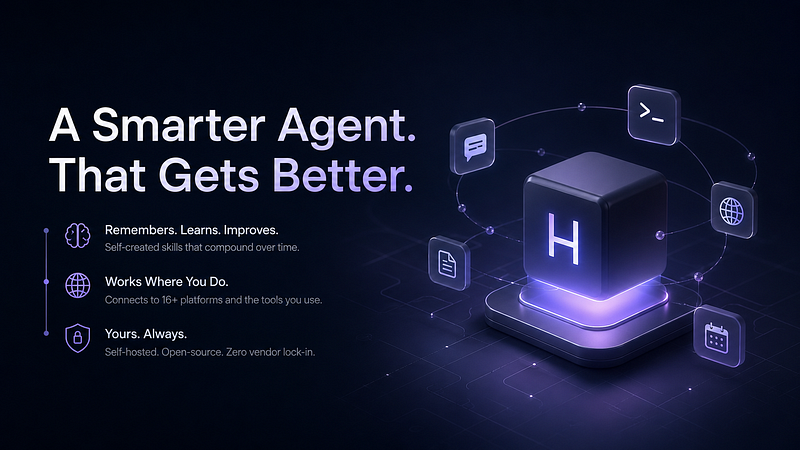
The thing that makes it genuinely interesting is what Nous Research calls a closed learning loop. After completing a complex task, Hermes automatically writes a reusable “skill”, a structured document that captures the procedure, known pitfalls, and verification steps. The more you use it, the better it gets at your specific workflows. Not in a vague, marketing-copy way. Measurably: benchmarks from TokenMix.ai show that self-created skills cut research task completion time by 40% compared to a fresh agent instance.
Since launching in February 2026, the project has grown to over 180,000 GitHub stars under an MIT license. It’s currently at v0.15.2, supports 20+ messaging platforms (Telegram, Slack, Discord, WhatsApp, Signal, Email, and more), and can run on a basic VPS for as little as €5 a month.
The short version: most AI tools answer questions. Hermes executes tasks, remembers what it learns, and gets better the longer it runs.
How is this different from just using ChatGPT or Claude?
This is the most important question to settle before you go any further.
A standard AI assistant like ChatGPT, Claude.ai, or Gemini is session-based. You open it, ask something, get an answer, close it. The context evaporates. Next time you’re back, you start from scratch. That’s perfectly fine for one-off questions. It completely falls apart for anything that requires continuity, automation, or workflows that need to keep running while you’re not at your desk.
Hermes is architecturally different in a few ways that actually matter:
Persistent memory: Hermes runs continuously on your server. Memory is stored as markdown files that persist across sessions, platforms, and devices. The agent who answered your Telegram message at 9 am has full context when you come back via CLI at 2 pm.
Self-created skills: When Hermes solves a hard problem, it writes a skill document so it never has to re-derive the solution from scratch. Those skills get refined every time they’re used.
Natural-language scheduling: Describe a recurring task in plain English, “send me a daily summary of unread emails at 8 am”, and Hermes schedules it. No YAML. No manual configuration.
You own the infrastructure: All data stays on your machine. No telemetry, no cloud lock-in, no vendor dependency.
How does it compare to the tools you’re probably already using?
- Hermes vs Claude Code
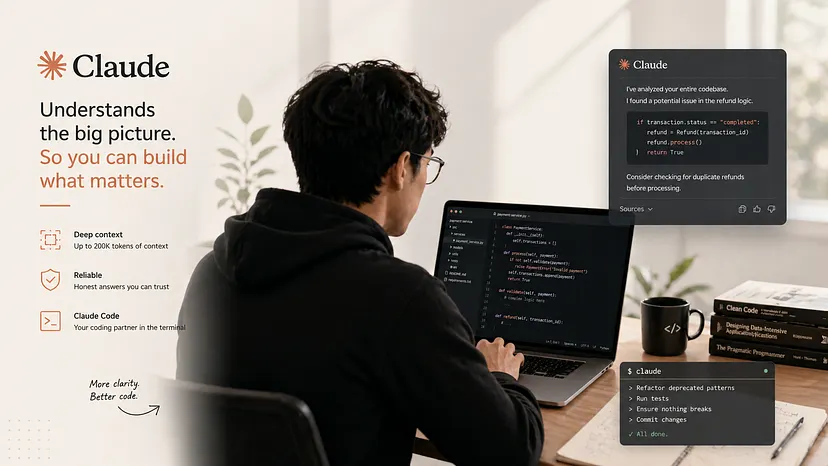
Claude Code is Anthropic’s terminal-based coding agent. It reads your entire project directory, understands file relationships, follows import chains, and runs the full write → test → fix → verify loop without you constantly switching windows. Its codebase understanding, as of 2026, is genuinely unmatched.
Honest take: these two don’t really compete. They solve different problems.
Use Claude Code when the job is: write code, refactor code, debug code, understand a codebase.
Use Hermes when the job is: run an always-on automation, manage workflows across messaging platforms, or build a persistent assistant that compounds over time.
A lot of engineering teams are running both. One developer workflow described on MindStudio: Claude Code handles active development in the IDE; Hermes, accessible via Telegram, handles knowledge work on the go and scheduled tasks that run overnight.
2. Hermes vs OpenClaw
OpenClaw is the incumbent self-hosted agent, with 374,000+ GitHub stars, the largest skill marketplace (ClawHub, with 5,700+ community skills), and a head start. It’s the closest direct comparison to Hermes.
Both run under an MIT license, but the similarities largely stop there.
On memory, Hermes wins clearly; it’s automatic and persistent across sessions, while OpenClaw requires manual setup to get the same result. On skills, Hermes auto-generates them from completed tasks; OpenClaw relies on a human-curated marketplace. On security, the gap is sharpest: Hermes has zero CVEs as of May 2026, while OpenClaw had multiple flagged in the same period.
Where OpenClaw still has the edge: platform reach (24+ messaging integrations vs Hermes’s 20+) and ease of setup. OpenClaw is genuinely more approachable for non-technical users. Hermes requires moderate technical comfort, Docker, API keys, and a bit of patience, which is a real barrier for smaller teams without a developer on hand.
The honest verdict: OpenClaw wins on ecosystem breadth and ease of setup. Hermes wins on learning depth and security. For a small startup team using the agent daily for six-plus months, Hermes compounds in ways OpenClaw can’t. For a company deploying across dozens of chat platforms at scale, OpenClaw’s integration library saves months of engineering time.
3. Hermes vs Cursor
Cursor is a VS Code fork with AI woven into every keystroke, autocomplete, whole-file refactors, and inline suggestions. It’s the best IDE-native AI experience on the market right now, full stop.
It’s a hard limit: it can’t leave the editor. No running tests autonomously, no scheduled tasks, no memory beyond the current session.
Hermes isn’t a replacement for Cursor any more than a deployment pipeline replaces an IDE. The stack many developer teams have settled on in 2026: Cursor for daily editing, Claude Code for complex refactors, Hermes for everything that needs to run on its own.
What does Hermes actually do in practice?
For engineering teams:
- Long-running deployment checks and incident summaries are delivered where your team already communicates.
- Competitor research compiled into markdown reports, dropped directly into Claude Code as build context.
- Multi-agent pipelines where a main agent delegates parallel tasks to sub-agents.
For ops and founders:
- Daily briefings pulled from emails, Slack, and your calendar on your phone before you open your laptop.
- Recurring research tasks (market monitoring, hiring signals, pricing changes) that run on schedule and only surface what actually changed.
- Codebase onboarding for new hires, where Hermes has already internalized project conventions after weeks of use.
The practical bar for getting value out of this: you need recurring tasks, and you need to be willing to invest a few hours upfront in setup. If your team’s AI usage is mostly one-off questions, a standard chatbot is probably enough. If you have workflows that repeat daily and context you keep re-explaining to your AI tools, Hermes is worth a serious look.
The Questions Your Team Will Ask
Is it free?
The framework is free under MIT. You pay for LLM API calls (roughly $0.30 per complex task on budget models) and optional VPS hosting ($5–10/month for always-on). Running it locally with Ollama eliminates API costs.
How hard is it to set up?
More involved than a SaaS tool, less painful than it sounds. The official installer runs on Linux, macOS, and WSL2 via a single curl command. The real setup time is connecting your LLM provider, messaging platforms, and configuring your first skills. Budget 2–3 hours for a working first deployment.
Is this the same as the Hermes LLM models on Hugging Face?
No. The Hermes LLM family (Hermes 2, 3, 4) is a language model. Hermes Agent is a separate product, an agent framework that can connect to those models or to OpenAI, Anthropic, or any other provider.
Is it production-ready?
It’s two months old, which means some rough edges are real. Enterprise-grade audit logging and governance tooling are still maturing. For solo developers and small teams building internal automation, it’s already delivering genuine value. For compliance-sensitive deployments, give it another quarter.
What’s the best AI agent setup for a tech startup in 2026?
Honestly, probably a combination. Claude Code for engineering, Cursor for daily IDE work, Hermes for persistent automation and recurring workflows. These tools are complementary, not competitive. Picking one and ignoring the rest is leaving real productivity on the table.
Should Hermes Agent Be in Your Stack?
Hermes Agent is the most interesting open-source AI development of early 2026, not because it beats everything else, but because it introduces a genuinely new pattern: an agent that gets meaningfully better at your specific workflows over time, on infrastructure you control, without a subscription.
For tech startup teams, that means less time re-explaining context to your AI tools and more time actually building. Whether that trade-off is worth the setup cost depends on how repetitive your work is and how comfortable your team is with self-hosted infrastructure.
The trajectory is promising. The question is whether your team’s workflows are ready to take advantage of it.
TL;DR
Hermes Agent is a self-hosted AI agent that actually remembers what it learns and gets better at your specific workflows over time, which is more than most AI tools can honestly claim. It’s not a replacement for Claude Code or Cursor; it’s the missing piece that handles everything needing to run autonomously while you’re not watching. If your team has repetitive workflows and keeps re-explaining context to your AI tools, this is worth a serious look.
Looking to build a high-performing remote tech team?
Check out MyNextDeveloper, a platform where you can find the top 3% of software engineers who are deeply passionate about innovation. Our on-demand, dedicated, and thorough software talent solutions provide a comprehensive solution for all your software requirements.
Visit our website to explore how we can assist you in assembling your perfect team.