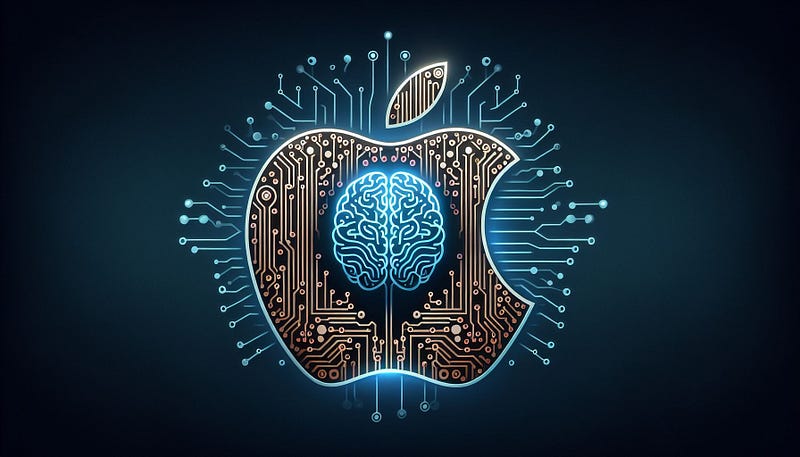
In a world chasing cloud superintelligence, Apple is going small on purpose.
1. Apple’s Understated but Calculated Choice
While rivals Google and Microsoft hurry to stake their territory in cloud-based AI, Apple is heading in the opposite direction: on-device intelligence.
Apple announced new AI features at WWDC 2025, not on some servers somewhere, but natively on iPhones, iPads, and Macs. It’s a fancy-sounding piece of high-tech to say—but it’s a paradigm shift with profound implications.
Why is Apple going local while the rest are going global?
This isn’t some sudden shift—it’s a low-key, long-term goal Apple has been pursuing the entire time. While everyone else is screaming from the rooftops about massive cloud-based language models, Apple has been developing the foundations to do something closer, more integrated, and more convenient.
2. Privacy Is the New Luxury
Apple’s brand is all about privacy, and on-device AI is its crown jewel. Here’s why:
- No cloud, no leak: Your data never leaves your device
- Instant processing: Zero delay or lag from distant servers
- User-first design: Does not store your individual patterns and habits locally
With public trust in technology companies eroding, Apple’s approach is offering a guarantee to consumers. This is not a path towards privacy that only benefits tech-savvy consumers—this benefits the masses, who are becoming increasingly fearful of data abuse.
3. The Technology Behind It All
Apple has spent years developing infrastructure for this day:
- Neural Engine: They possess their own custom silicon (in A-series and M-series chips) that is optimised for AI computation—so your device can think faster and smarter.
- Core ML: A performance- and privacy-focused machine learning pipeline—giving developers the tools to create efficient, secure AI apps.
- Successful Models: Apple develops small, specialised models for use in tasks like summarisation, auto-responding, and image editing, so you get useful features without draining your battery or data.
They allow Apple to deliver AI that is highly efficient as well as highly powerful. Most significantly, they allow Apple to deliver advanced features locally on-device, without the need for constant internet connectivity.
4. It’s Not Just Smart—It’s Subtle
Apple doesn’t want to show off flashy, intelligent chatbots. Instead, their AI appears where you least expect it:
- Siri is proactive and contextual—so it feels like your phone actually “gets” you.
- The Photos app can auto-sort, tag, and organise by visual content—making photo management effortless.
- Mail offers intelligent responses based on tone—helping you communicate faster and more naturally.
- Safari offers reading help and summaries—making browsing more efficient and accessible.
This “invisible AI” enhances the user experience without making the user endure gimmickry. Apple desires the AI to be so integrated into the device that it has become second nature—something that does not require a manual.
5. The Business Case: Why It’s Brilliant
On-device AI is not just user experience—it’s a moat for business.
- No server costs: Does away with Apple’s reliance on expensive cloud infrastructure—so Apple can keep scaling AI without extra overhead.
- More value from hardware: iPhones and Macs become long-term, capable AI devices—meaning users get more value out of every upgrade.
- Service layer benefit: Apple may incorporate AI into subscriptions such as iCloud+ and Fitness+, thereby enhancing its ecosystem and creating more sticky products.
This model reinforces Apple’s ecosystem—each added AI feature is one more reason that individuals will stay on Apple hardware. More significantly, it shifts the narrative: AI is not a cloud-based service — it is something that your phone or your laptop can do right out of the box.
6. The Competitive Ripple: Upsetting the AI Status Quo
Apple’s local-first approach is making competitors rethink their strategy. As others build monolithic cloud stacks, Apple is proactively pushing intelligence to billions of devices.
Not market segmentation — this is reimagining what AI is in consumer technology. Rather than giving you a solution that’s one size fits all, Apple makes AI personal to you, depending on data that is unique to your device.
This will likely be the most scalable, secure, and sustainable method of long-term AI deployment.
Conclusion: The Real Play Isn’t Just AI — It’s Trust
Apple’s bet on AI on the device is not merely technical — it is philosophical.
At a time when users are becoming increasingly sceptical of snooping and wary of cloud-connected everything, Apple is asking the question, “What if your AI doesn’t need to know everything about you to help you?”
By having the intelligence closer to the user, Apple is building more than an AI assistant.
Looking to build a high-performing remote tech team?
Check out MyNextDeveloper, a platform where you can find the top 3% of software engineers who are deeply passionate about innovation. Our on-demand, dedicated, and thorough software talent solutions are available to offer you a complete solution for all your software requirements.
Visit our website to explore how we can assist you in assembling your perfect team.