Think about a normal workday, when you check email, search for a document, open a spreadsheet, and follow up with a colleague. None of these tasks is hard by itself, but moving between all of them takes up a lot of your time.
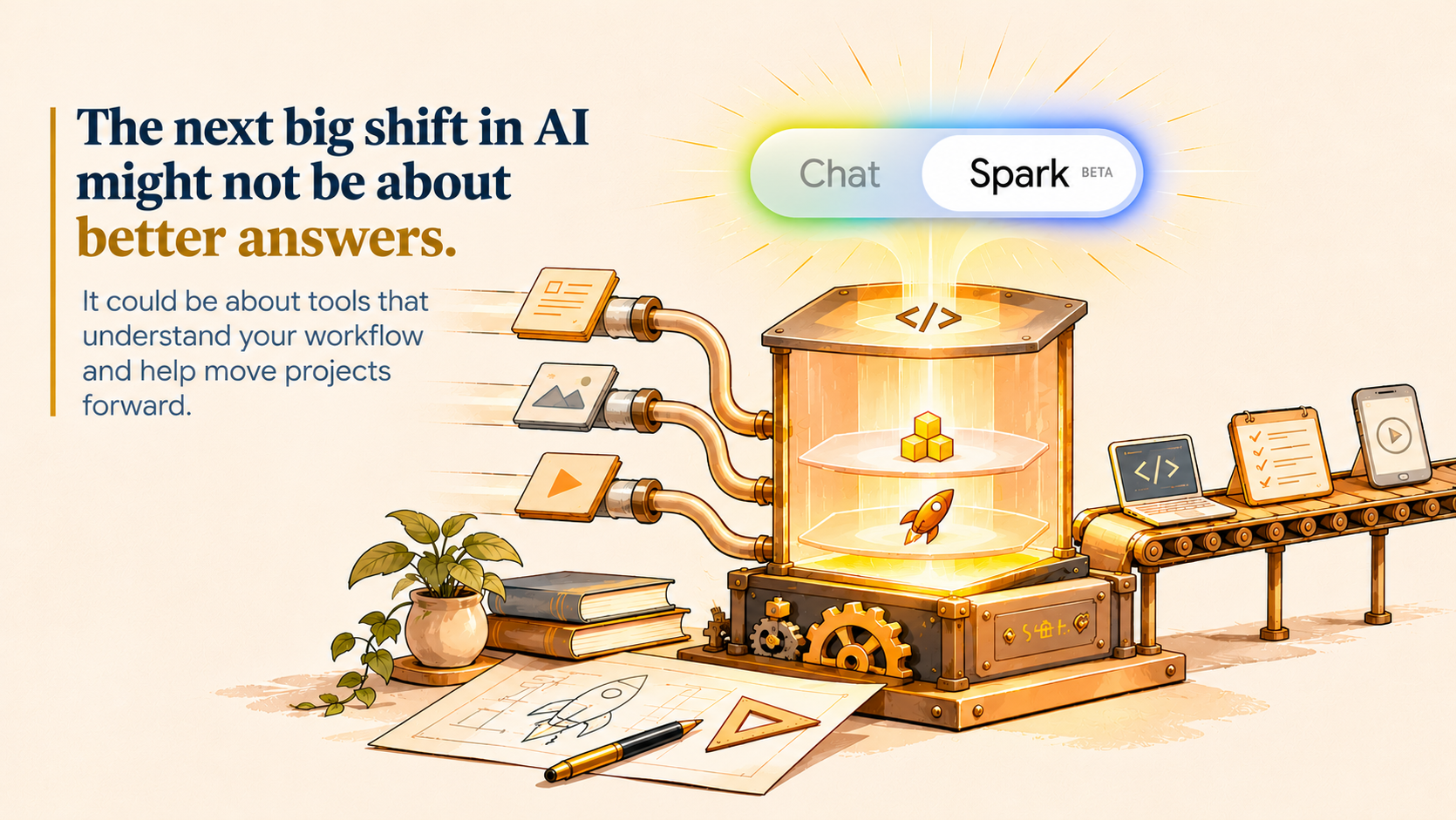
Now imagine having an assistant that can handle some of that work without waiting for you to ask at every step. That is the idea behind Gemini Spark, Google's personal AI agent.
Google announced Spark at Google I/O on May 19, 2026, and described it as an assistant that works on tasks in the background under your direction. It first went to trusted testers in the US, with a beta planned for Google AI Ultra subscribers.
On July 29, Google announced that Gemini Spark would expand to Google AI Pro subscribers in India over the following weeks. In October, Google also began rolling out a redesigned Gemini interface with a new "Task" option. According to 9to5Google, this option brings Spark's task features directly into the main Gemini chat experience. Google’s Help Center still uses the Gemini Spark name for the feature, even though the app now labels the option “Task.”
Spark works with Gmail, Docs, Sheets, and other Google Workspace apps, and runs on Google’s cloud, so it can keep working even when your laptop is closed or your phone is locked. In its May announcement, Google said Spark ran on Gemini 3.5. Google’s July announcement for India later identified Gemini 3.6 Flash as the model powering the assistant.
Access has limits, though: Spark requires a Google AI Pro or Ultra subscription on a personal Google account, and Google says it is not available in the European Economic Area, the UK, Switzerland, or Nigeria.
For startups, the bigger question is what this way of working means for the software they build.
From Asking Questions to Getting Things Done
With a chat assistant, you ask a question and get an answer, and then you decide what to do with it yourself. If the answer belongs in an email or a document, you usually have to copy it there by hand.
Spark is built to take on more of those steps. Google's examples include setting up recurring tasks, pulling together meeting notes from emails and chats, creating a Google Doc and drafting a related email.
Imagine a client asks your company for a proposal. You would need to find details from past projects, check old conversations, write a response, and send it back. An assistant with access to the right files could find the material, write a first draft, and get an email ready for you to review. This is only an example, and you would still need to check everything before you send it.
Google says Spark works under your direction and is designed to ask for your approval before big actions, such as sending an email or spending money. The goal is to reduce routine work, not to take people out of important decisions.
Why This Matters for Startups
In a startup, one founder might run sales calls, review product updates, and prepare an investor report on the same day. When a few people carry so much, small tasks get in the way of the work that matters most, and a connected assistant could take some of that pressure off.
People now expect their tools to work together, and a product your customers use is much more useful when it connects with email, calendars, documents, and sales records, so nobody has to copy information between them.
Not every startup needs an AI assistant, though, and making one existing task easier often helps more than adding a new feature.
Your Software Needs to Work With Other Tools
Tools like Spark depend on getting information from many different places, and an assistant is only useful if it can find the right information and use it properly. If your product keeps its data locked inside and offers no good way for approved tools to reach it, connecting it to a larger workflow will be difficult. Good APIs, clear permissions, and reliable integrations make any software easier to connect to the tools your customers already use.
Google says Spark can connect to outside apps, and at I/O it named Canva, OpenTable, and Instacart. This works through MCP, short for Model Context Protocol, which is an open standard that helps AI tools connect to other apps.
On October 28, Google announced a preview of its Connected Apps Platform, giving developers a way to bring their applications into Google Search and the Gemini app.
Developers can build integrations using a cloud-hosted MCP server or Android MCP through AppFunctions APIs, then submit their applications through the Google Connected Console. They can choose whether their integration appears in Search, Gemini, or both. Google also reported that more than 50 Connected Apps were available across the two platforms. Access to the developer preview is opening in phases.
Not every app will be available to every user. If you are a SaaS founder, the question to ask is whether another approved tool can safely get information from your product or do an approved task in it.
What Could This Look Like Inside a Small Company?
Think about a ten-person startup where important details are spread across inboxes, documents, and project tools. An assistant could help the founder find sales conversations that need a follow-up, and it could help the engineering team gather customer feedback and reported bugs before a planning meeting.
These are only ideas, not a promise that Spark does all of this today, because what it can do depends on the apps you connect, your permissions, and what is available in your account. It also does not mean a company can run without people, since someone still has to make decisions and take responsibility.
The Hard Part Is Making It Reliable
Building software that finishes tasks across different apps is not as simple as plugging a model into a few APIs. If an assistant picks the wrong customer record, shares a private file with the wrong person, or writes an email using old information, a small mistake can quickly become a serious problem.
For that reason, engineering teams need to plan carefully for permissions, security, and approvals. Each person should see only what they are allowed to see; actions that affect customers, money, or important records should be checked, and there should be a record of what the system did and who approved it.
Cost matters as well, because a service that runs in the background uses computing power, and the bill grows quickly if every small job needs a large model. Teams have to decide which jobs can use simpler methods, when a stronger model is worth the price, and when a person should take over.
The Kind of Engineers Startups Will Need
As products become more connected, startups need engineers who understand how apps talk to each other, how data is stored, and what can go wrong when software acts by itself.
Backend work, API design, data security, and system design all matter, and so does careful testing of what happens when a service goes down or a user lacks the right permission. A product has to work for real customers and not just in a demo.
For founders, this changes how they hire. They should look for people who think beyond a single feature and understand how the whole product fits together. Experience with integrations, security, reliable backend services, and distributed systems can matter just as much as experience with AI models.
What Founders Should Do Next
Gemini Spark shows where everyday software may be heading, but you do not have to rebuild your product just because a new tool has appeared. A better starting point is to look at how your customers use your app, including where they copy information by hand and which tasks make them switch between tools. From there, you can start small, with an integration, a better API, or a fix for one common task, and make sure your permissions let other apps work with your product safely. Not every workflow needs an autonomous agent; sometimes a reliable integration is enough.
Software Is Becoming More Connected
People do not want one more dashboard to check. They would rather have the tools they already use work better together, and Gemini Spark is one sign of that direction. Its launch does not mean every business has to change overnight, but it does leave founders with a question about how their product will fit into a world where software does more of the work between apps.
The opportunity is not only to build another assistant. It is also to make your existing product easier to connect and use.
At MyNextDeveloper, we help startups and growing businesses find experienced software developers, AI engineers, and technical talent, whether they are improving a SaaS product or building something new.
TL;DR
Gemini Spark is Google’s AI agent that can keep working in the background, even when your laptop is closed, and it’s designed to ask before doing big things like sending an email or spending money. For startups, the real lesson isn’t to build your own assistant. It’s to make your software easy for other tools to connect to, with good APIs, clear permissions, and a record of every action.
The hard part is making it reliable, because a small mistake gets serious when software acts on your behalf. Start with one integration or one common task, and hire engineers who can think about the whole product.
Looking to build a high-performing remote tech team?
Check out MyNextDeveloper, a platform where you can find the top 3% of software engineers who are deeply passionate about innovation. Our on-demand, dedicated, and thorough software talent solutions provide a comprehensive solution for all your software requirements.
Visit our website to explore how we can assist you in assembling your perfect team.