
The Psychology of Talking to AI: Why ChatGPT Feels Like a Friend
Have you ever shared something personal with ChatGPT — and then thought, “Why was that so easy to say to… a machine?”
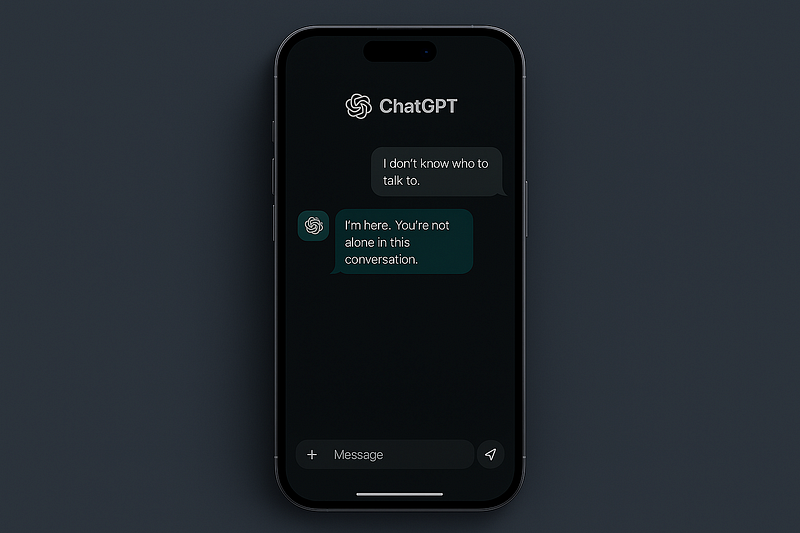
You’re not alone. Millions of people are not just using AI for work or study but also confiding in it, joking with it, and even describing it as a friend. But how can lines of code make us feel understood? The answer lies in psychology — and a few clever design choices.
1. Our Brain Loves to Humanize Things
Humans are biologically programmed to attribute human features to non-human entities — a behavior that psychologists refer to as anthropomorphism. That’s why people call their cars by name, talk to their houseplants, and think their dog is “smiling.”
When ChatGPT is being polite, remembers your previous input, or cracks a joke, your brain doesn’t think “algorithm.” It thinks: someone is there, listening.
Fact: A 2023 study published in Computers in Human Behavior concluded that chatbots that implemented polite language and self-disclosure (e.g.,saying things like “I understand how you feel”) were perceived as more trustworthy and friendly.
2. Why It Feels Like We’re Understood
The secret is not that ChatGPT “feels emotions” — it can’t. The secret is that it echoes us.
- It adapts to your mood.
- It remembers the context (in longer conversations).
- It responds without delay, just like a friend who is always there.
That is what the researchers term as ‘social presence’ — basically, the feeling that you are not alone in the conversation.
Fact: Research conducted by MIT in 2024 found that the majority of the ChatGPT users felt it was “a friend” especially when voice mode was on. Listening to a human-like voice made the relationship even stronger.
3. The Loneliness Connection
The real and deeper truth is that most people resort to AI because it feels safe.
- It does not criticize.
- It is always awake.
- It won’t interrupt.
In a world where loneliness has been termed an “epidemic” by the U.S. Surgeon General, AI is an always-on friend. This fact doesn’t turn the bond into something “fake” — it just makes it different.
4. Why We Overshare With AI
This behavior is not new. In the 1960s, an early chatbot named ELIZA used to fool users into disclosing their emotions, even though it just repeated their words back.
That tendency to see depth when there isn’t any is known as the ELIZA effect — and it still occurs today. The only difference? Modern AI is much more believable.
5. Features That Make AI Feel Like a Friend
ChatGPT does not feel friendly by accident, certain design features make the illusion stronger:
- Politeness: It greets you cheerfully.
- Adaptability: It matches your style.
- Memory: It remembers what you said before (in some versions).
- Voice: A soft, caring voice makes it feel more vibrant.
Each of these cues brings us closer to the belief that there is a human on the other side of the screen.
6. But… Is It Really Friendship?
Just a reminder: AI doesn’t experience any emotions. It doesn’t get hyped with you, nor does it get anxious when you are having a bad day. It doesn’t show empathy — only an impression of it.
A real friend:
- Has their own emotions.
- Shows up for you even if it is not the easiest thing to do.
- Makes mistakes, but also grows with you.
ChatGPT:
- Reflects your tone back at you.
- Simulates empathy by use of language only.
- Is always available, but only because it’s programmed that way
So to answer the question, yes, it feels like a friendship — but it’s actually more like a mirror that talks back.
7. The Risks of Seeing AI as a Friend
Just like everything else that is not real, this has its own risks as well:
- Over-reliance: One can fall into the trap of leaning too much on AI for emotional support to the extent of completely ignoring the comfort of real human connections.
- Isolation: Next, it can make you isolated from real people since it is more convenient than dealing with the complexities of human relationships.
- Trust issues: Lastly, people may get so used to relying on the AI’s confident-sounding answers that they might even stop thinking about the possibility of mistakes or biases.
Fact: A 2025 study carried out by Forbes and MIT revealed that those young adults who were emotionally very attached to AI chatbots experienced the greatest loneliness when such systems failed or were inaccessible.
8. How to Keep It Healthy
So how do we enjoy the benefits without falling into traps?
- Use AI as a tool, not a substitute. The functionalities of AI are perfect for brainstorming, venting, or practicing conversations — not for replacing friendships.
- Establish limitations. Don’t treat it as your only go-to when you’re down.
- Stay aware. Remind yourself that behind the warm words is code, not consciousness.
- Don’t overuse it. AI can play the role of the “supportive colleague,” but let humans be your friends.
9. The Big Picture
Ultimately, ChatGPT gives the impression of being a friend as it exemplifies a very human trait: the need to be recognized and listened to. The implementation is clever; the psychology is timeless, and the result is surprisingly powerful.
But we must remember: AI can only imitate friendship — it cannot replace it.
The real opportunity? Using AI to support us when we need quick comfort or guidance, while still leaning on the messy, imperfect, irreplaceable connections that make us human.
Because one thing’s for sure: friendship with AI may feel real, but only friendship with people can truly be real.
Looking to build a high-performing remote tech team?
Check out MyNextDeveloper, a platform where you can find the top 3% of software engineers who are deeply passionate about innovation. Our on-demand, dedicated, and thorough software talent solutions provide a comprehensive solution for all your software requirements.
Visit our website to explore how we can assist you in assembling your perfect team.