Building Startups with AI Co-founders: Myth or Reality?
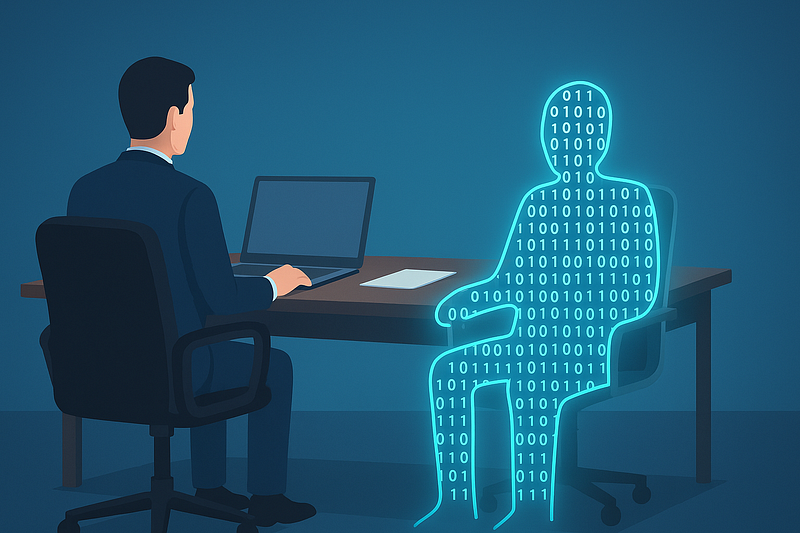
Imagine: you are at a café, scribbling your startup idea outline on a napkin. Your co-founder sits across, they don’t need coffee, don’t sleep, don’t take equity, and they are not even human — they are AI.
Seems like a Black Mirror episode. However, the real question is: Is it actually the future of entrepreneurship or just another trendy buzzword?
What People Mean by “AI Co-Founder”
The term “AI co-founder” has been mentioned a lot lately, and you might have wondered what it really means. Now, it does not mean that AI has become a co-founder of the business with a mind of its own, for sure, nor can it give opinions about your logo. What it really refers to is this: a stack of AI tools that help you complete your work, e.g., brainstorming ideas, automating necessary work, and making decisions faster, while acting as a silent partner.
Startups like CoFounder.AI are claiming to be exactly that — a partner you can bounce ideas off, minus the awkward co-founder fights over equity splits.
However, this leads us to the question: How much of this is real partnership and how much is just clever packaging?
What AI Can Actually Do for Founders Today
- Build Faster Prototypes — With the help of AI tools, it is possible to transform rough sketches into functional prototypes in a matter of hours. Uizard or Bubble.io are examples of platforms that help entrepreneurs jump over the early tedious tasks and validate real products with very limited resources.
- Keep Operations Lean — “AI-native startups” are a great example of the fact that even small teams can successfully start and run a business. Instead of hiring big teams, founders rely on AI to handle marketing, coding, customer feedback, and more.
- Support in Funding & Strategy — Artificial intelligence can make startup pitches easy for human evaluators by providing scores and predicting success probability. It’s not raising capital for you, but it’s becoming a powerful assistant in the process.
- Act as a Coach — There are some experimental AI platforms nowadays which are actually helping founders to conduct reflective exercises the same way a mentor would, e.g., through challenging assumptions and prompting strategic thinking.
Where the Myth Still Stands
This all might sound very thrilling; however, referring to AI as a “co-founder” involves —
- No gut instinct: A typical co-founder challenges you, argues when necessary, and gives you fresh ideas from different angles. On the contrary, AI most of the time simply agrees with what you say — it’s more like a “yes-man” rather than a partner who is at variance with you.
- No creativity at the edges: AI is great at remixing what exists. But that 2 AM spark of an idea — the kind that changes industries — still belongs to humans.
- No legal standing: An AI can’t own equity, sign contracts, or take responsibility. At least not under today’s laws.
So right now, the “co-founder” label is more metaphor than reality.
Myth or Reality? The Hybrid Answer
- Reality: AI is already a powerful tool that lets founders work faster, cheaper, and smarter. Solo founders can now run operations that once needed whole teams.
- Myth: AI isn’t your debating partner or equity holder. It doesn’t feel, dream, or argue like a human.
The truth sits in the middle: AI is not a co-founder in the traditional sense. But it’s also not just “another tool.” It’s becoming something in between — a digital teammate that’s reshaping how we think about building companies.
Signs of the Future
- CoFounder.AI by Clarence Wooten: Marketed as a digital assistant for the entrepreneurial journey.
- AI-native startups: Small AI-driven teams competing with large companies, thereby altering the process of entrepreneurship.
- Research-backed systems: AI models that can evaluate startups more accurately than traditional methods.
These are the first signs that the concept “AI co-founder”, although not a literal one, is very close to becoming a practical solution.
The Takeaway
AI is not meant to take the place of a human co-founder. Rather, it is here to reshape the meaning of a lean startup. If the 2000s were characterized by scrappy garage ventures, and the 2010s known as the era of rapid scaling with VC money, the 2020s might be remembered as the decade of AI-powered founders.
In other words: AI won’t replace the human spark that launches companies. But it might just become the co-pilot that helps more founders take off.
To put it simply, the greatest advantage is that AI lowers the barrier to entrepreneurship. If you’ve got an idea, you don’t need deep pockets or a massive team to try it anymore. And that feels less like sci-fi and more like a quiet revolution already happening.
Looking to build a high-performing remote tech team?
Check out MyNextDeveloper, a platform where you can find the top 3% of AI engineers who are deeply passionate about innovation. Our on-demand, dedicated, and thorough software talent solutions provide a comprehensive solution for all your software requirements.
Visit our website to explore how we can assist you in assembling your perfect team.