AI Licensing is the New Saas Sprawl, and Your Startup is Already Overpaying
Cast your mind back to 2018: every team had a company card and a problem to solve. Marketing signed up for six tools that did roughly the same thing. Sales had three CRMs running in parallel. Engineering had subscriptions nobody remembered approving. Finance eventually called it SaaS sprawl and spent a year cleaning it up.
Most companies sorted it out. Centralised procurement, quarterly audits, and licence management. Painful, but fixable.
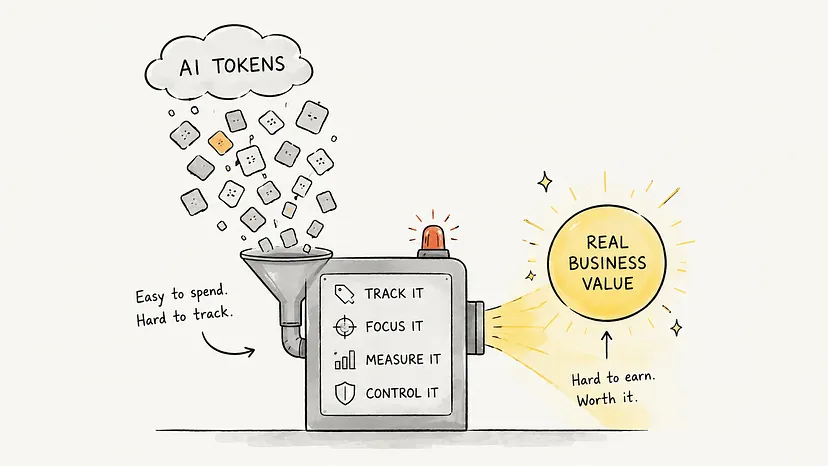
Then AI came along. And the same pattern started over, except this time, the tools are free to try, instant to adopt, and eye-wateringly expensive when nobody’s watching.
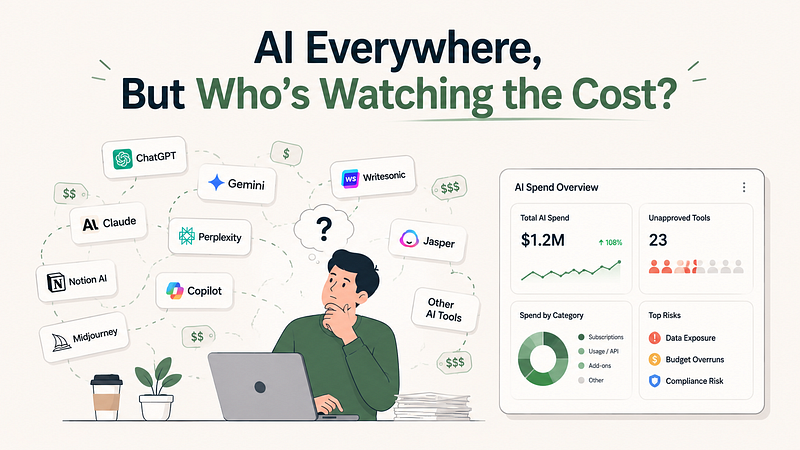
According to Zylo’s 2026 SaaS Management Index, AI-native app spending rose 108% in 2025, averaging $1.2 million per organisation. If that number feels high, it’s probably because most startups haven’t actually added up what they’re spending on AI. The total tends to be a surprise.
Two Things Driving the Overspend
The pricing model quietly changed:
SaaS used to be simple. You paid per seat, per month. Fixed cost, predictable invoice, easy to audit.
AI didn’t keep that model. Add-ons now inflate base software costs by 30–110%. In 2025, 68% of vendors locked AI behind premium tiers. Microsoft Copilot is a good example: $30 per user per month sounds manageable, but only if you already have a Microsoft 365 licence. The actual per-seat cost is meaningfully higher than what the pricing page implies.
Then there’s consumption-based pricing, where your bill shifts every month depending on how much your team uses the product. 78% of IT leaders reported unexpected charges from AI or consumption-based pricing in 2025, up from 65% the year before. The old model rewarded predictability. The new one rewards whoever reads the contract most carefully, and that’s rarely anyone at a startup in the middle of shipping.
Your team is already using tools you don’t know about:
This is the harder conversation.
59% of employees use AI tools not approved by their company. Among executives and senior managers, that number is 93%. More than half are expensing those costs without any approval process, which makes budgeting almost meaningless.
Here’s a real example. A Series A fintech startup ran a security audit and found 23 different unapproved AI tools being used across the engineering team. None were sanctioned. One developer had uploaded customer data to a free AI chatbot for analysis. The potential GDPR exposure: $2.8 million.
Meanwhile, companies waste an average of $89,000 per year on enterprise AI licences that nobody uses because the team is using free tools instead of the paid ones the company bought. Paying for tools people ignore, while they use tools you never approved. That’s the AI sprawl problem in one sentence.
What Startups Are Actually Asking
Q. How do we even know if we’re overpaying right now?
Start with a simple AI spend audit, not a full IT review, just a focused one. Pull every subscription with “AI” in the name, every API invoice, and anything expensed under software or tools. The average organisation manages 305 applications, and 87% are bought directly by individual teams, not IT. Assume your AI stack is similar. Then look for duplicates — different teams buying different tools to solve the same problem is always the most expensive pattern on any audit.
Q. We’re on an enterprise contract, aren’t AI features just bundled in?
Sometimes, but bundled doesn’t mean free. When a vendor bumps you to a higher tier to unlock AI, that upgrade cost is real even without a line item called “AI.” Every AI interaction requires compute, storage, and inference. Someone is paying for that; the question is whether you know when it’s you.
Q. What’s the real risk of shadow AI beyond the spend?
The wasted money is visible. The data risk is not. Three-quarters of employees using unapproved AI tools admit to sharing sensitive information with them, including customer data, internal documents, and business strategy. IBM’s 2025 Cost of a Data Breach Report found that breaches involving shadow AI cost an average of $670,000 more than breaches involving sanctioned tools. For a scaling startup, that’s not just a financial hit. It can end fundraising conversations and trigger regulatory action.
Q. Is there a moment to push back on pricing?
Yes, and that moment is now. SaaS vendors are under more pricing pressure than they’ve faced since the shift from on-premises software to the cloud. If you’re coming up to a contract renewal in the next six months, you have real negotiating leverage. Don’t go into that conversation without using it.
Four Things to Do This Quarter
- Run the audit.
Pull all AI-related spend into one place — subscriptions, APIs, expensed tools, embedded AI upgrades. Do it quarterly. AI costs move faster than annual reviews can catch.
2. Apply the FinOps playbook.
The same discipline that tamed cloud costs applies here. Tag AI spend by use case, set team-level budgets, and assign someone to own the number. It should be on your ops or finance lead’s list alongside cloud costs.
3. Give people better approved tools.
Banning AI doesn’t work; employees just get creative about hiding it. Companies with proper AI governance save $287,000 per year compared to those managing shadow AI chaos. Make approved tools easier to use than the alternatives.
4. Model consumption contracts before signing.
Any contract with pricing based on tokens, credits, or API calls can scale far beyond estimates. Run the numbers at 2x and 5x your expected usage before you sign. Negotiate a cap if the 5x figure would hurt — not after the invoice lands.
The Same Problem, a Faster Clock
SaaS sprawl took years to become a recognised problem and years more to solve. AI is running through the same cycle in months, with higher unit costs and a compliance layer (GDPR, EU AI Act, data governance) that was never part of the original SaaS problem.
IDC predicts that by 2028, 70% of software vendors will have moved away from seat-based pricing toward consumption or outcome-based models. The shift is already underway.
The startups that come out ahead won’t be the ones spending the least on AI. They’ll be the ones who know exactly what they’re spending, what it’s doing, and how to keep it from running ahead of the budget.
You’ve fixed this problem before. Same thinking, just move faster this time.
TL;DR
AI licensing has become the new SaaS sprawl. Spending on AI-native apps rose 108% in 2025, averaging $1.2 million per organisation, and most startups have no clear picture of what they’re actually spending. Shadow AI is making it worse: 59% of employees are using unapproved AI tools, companies are wasting $89,000 a year on licences nobody uses, and a single shadow AI data breach costs $670,000 more than one involving sanctioned tools. The fix is the same discipline that solved SaaS sprawl — a quarterly spend audit, team-level budgets, approved tools that people actually want to use, and consumption contracts with caps negotiated before signing.
Looking to build a high-performing remote tech team?
Check out MyNextDeveloper, a platform where you can find the top 3% of software engineers who are deeply passionate about innovation. Our on-demand, dedicated, and thorough software talent solutions provide a comprehensive solution for all your software requirements.
Visit our website to explore how we can assist you in assembling your perfect team.