From Chatbot to Co-Worker: How to Redesign Your Product Around Agentic Workflows

The way people use AI is changing. Most product teams are used to using Artificial Intelligence in a way: a chat interface, a box to type in, and a helpful response. Someone asks a question, the AI model answers, and the human acts on it. This happens over and over again.
This is not a real workflow. It is a fancier way to search for things.
The next phase of AI product design is not about making the chatbot smarter; it is about making it unnecessary to ask questions in the first place. This is the shift from AI to Agentic AI: systems that do not just respond to instructions but plan, decide, and act across many steps with minimal human help.
What Is an Agentic Workflow?
Before we get into product design principles, it is worth being precise. Because “Agentic AI” is one of the overused terms in tech right now.
Here is the simplest definition: a chatbot waits for you, but an agent works for you.
A chatbot answers a question. An agent takes that answer, sends it to the right system, triggers a follow-up action, monitors the outcome, and only tells someone if something unexpected happens.
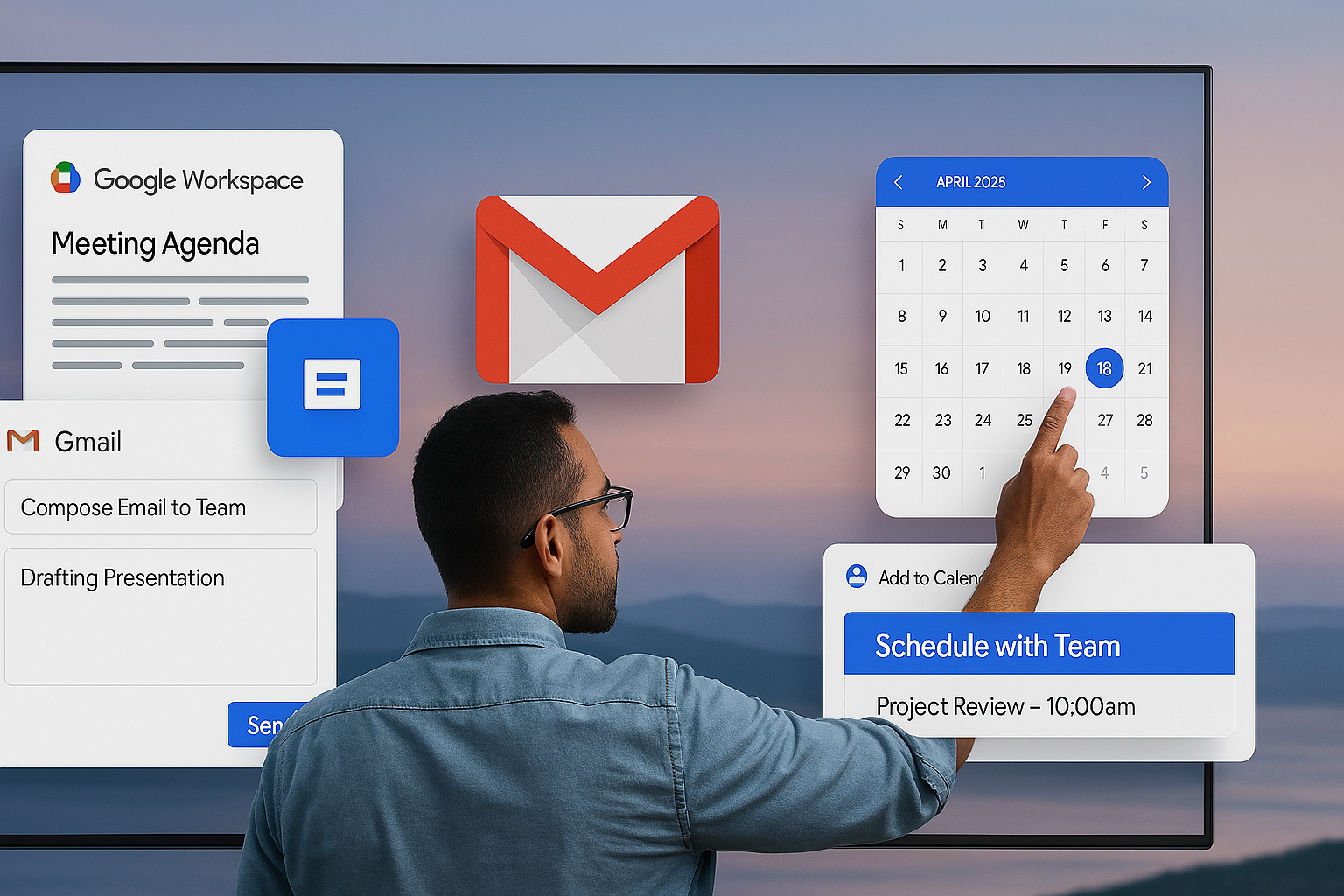
For example, imagine a product for customer onboarding. A chatbot version helps the customer success representative draft an email. An agentic version detects that a new account has just signed up, pulls their customer relationship management data, generates an onboarding checklist, schedules the kickoff meeting, and only flags the representative if the customer has not logged in within 48 hours.
This is still AI, but the product architecture is completely different.
Why Now? The Numbers Are Hard to Ignore
This is not an idea anymore.
According to McKinsey’s 2025 State of Artificial Intelligence report, 62% of organisations are already experimenting with using AI agents. High performers are nearly three times more likely to have changed their workflows as part of their Artificial Intelligence strategy.
This is still AI, but the product architecture is completely different.
Gartner predicts that 40% of enterprise applications will be integrated with task-oriented AI agents by the end of 2026. This is up from more than 5% in 2025.
A PwC survey of 300 executives found that 79% say Artificial Intelligence agents are already being used in their companies, and 66% of those users report measurable productivity gains.
Yet Deloitte’s 2025 research shows that only 11% of organisations are actively using agentic systems in production, 42% are still developing their roadmap, and 35% have no formal strategy at all.
That gap is the opportunity.
The 4 Core Questions Before You Redesign
When we work with product teams on workflow design, the conversation almost always starts with the same four questions:
1. Where does human time get wasted in your product?
Map the steps your users take today and find the ones that’re repetitive, rule-based, or dependent on pulling information from somewhere else. Those are agent candidates, not because AI is impressive, but because those steps do not need to be human.
2. What does “ judgment” look like in your domain?
Agents can execute. They still struggle with nuanced contextual low-frequency decisions. In your product, identify where human oversight genuinely adds value versus where it’s just inertia. Design the agent to handle the latter and escalate the former.
3. What are the failure modes?
This is the question most teams skip. An agent taking the wrong action at scale is worse than a chatbot giving a wrong answer. Before you give autonomy to a model, define what a catastrophic error looks like and build in checkpoints. Trust needs to be designed, not added after something goes wrong.
4. How will users feel about not being asked?
There is a real user experience consideration here. Some users will love that the system just handled it, others will feel bypassed. The best agentic products give users visibility into what the agent did, easy override controls, and an audit trail. Autonomy and transparency are not in conflict; they should be paired intentionally.
How to Redesign Your Product
1. Start with a Workflow Audit, Not a Feature List
The common mistake is treating agentic AI as a feature to be added rather than a lens to redesign existing flows.
Take a project management tool as an example. A basic AI feature adds a “summarise this thread” button, but an agentic redesign automatically triages tickets by type and urgency, assigns them based on team capacity, drafts the first response, and nudges the assignee if there is no update in 24 hours. The user’s job shifts from doing to reviewing.
2. Build for the Human-in-the-Loop, not the Human-out-of-the-Loop
The phrase “fully autonomous AI” makes investors excited and compliance teams nervous for good reason. The successful agentic deployments in production are not fully autonomous; they are human-in-the-loop by design.
This means identifying which decisions need a sign-off, which need visibility without approval, and which need no human involvement at all.
Build your product layer around this hierarchy. It will be both better for safety and better for adoption.
3. Design for Multi-Agent, Not Single-Agent
Here is where the architecture gets interesting.
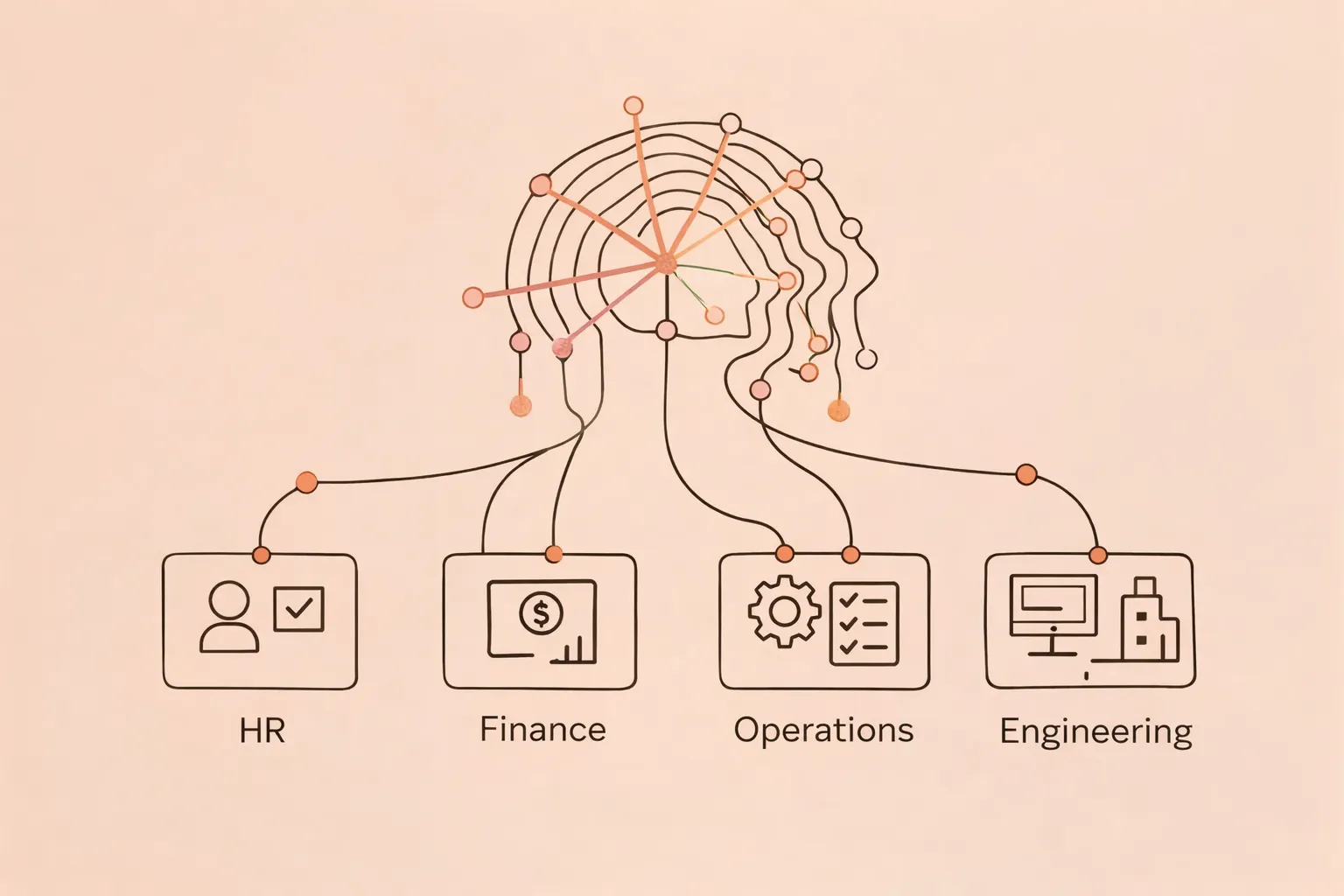
The real power of workflows is not a single AI doing one job, but multiple specialised agents handing off to each other across a workflow.
Think of it like a relay team. One agent monitors your data pipeline and flags anomalies, another investigates and generates a hypothesis, a third drafts the incident report, and a fourth notifies the right stakeholders. Each agent has a job and does it well. The workflow emerges from their coordination, not from any model being brilliant.
4. Instrument Everything
Agents make decisions in the background, so if you are not logging what they did, why, and what happened next, you are flying blind. Build observability into the product layer from day one, and it will be how you improve agent performance over time and build the audit trails that regulated industries will demand.
Common Mistakes Product Teams Make
- Over-automating early is a mistake: Start with one workflow, prove the return on investment, and expand.
- Trying to agent-ify everything at once is how pilots become disasters.
- Confusing orchestration with automation is another mistake: An agentic workflow is not a faster version of your current process, and if you automate a broken process, you get a faster broken process.
- Ignoring the data layer is also a mistake: Agents are only as good as the context they have access to, and cleaning up the data and application environment is an important part of any AI transformation.
- Treating user trust as a launch problem is another mistake: Trust in systems erodes fast after one bad experience, so build in transparency features before you go to market, not after.
What This Means for Your Product Roadmap
If your product roadmap still has AI as a feature column rather than an architectural principle, it is time for a rethink.
The companies building competitive advantages right now are not doing it by having better models but by having better workflows: tighter feedback loops, faster execution, less human overhead for the same output quality.
The chatbot was a starting point. It was the era of “AI as an assistant.” We have entered the era of “AI as a co-worker.” The products that will win are the ones that are designed around that reality from the ground up.
The blueprint is here, and the data is clear. The question now is execution.
TL;DR
Most companies use AI as a chatbot. The companies that are doing well are changing the way they do things around agents who can plan and do things and then take it to the next level if needed. They do not need to be told what to do.
Only a small number of organisations, 11%, are using these kinds of agents in their daily work right now, even though it is expected that about 40% of big company applications will have AI agents by the end of 2026.
This difference is an opportunity.
We should stop adding AI features to what we already have. We should start changing the way we do our work from the beginning.
Looking to build a high-performing remote tech team?
Check out MyNextDeveloper, a platform where you can find the top 3% of software engineers who are deeply passionate about innovation. Our on-demand, dedicated, and thorough software talent solutions provide a comprehensive solution for all your software requirements.
Visit our website to explore how we can assist you in assembling your perfect team.