
The Upstream Shift: Our Framework for AI-First Growth

We recently broke down how the digital landscape is moving beyond SEO and into the era of Generative Engine Optimisation. We said that now we are not just competing with websites, we are competing to be the source of truth that the Large Language Models use.
How do we do this? For a tech company, it is harder. We do not have the trust that a company gets from being around for a long time. We have to be smarter. We have to change from trying to get people to visit our website to trying to be the answer to their questions.
Here is the first part of how we’re doing this: the three main things we need to do to survive in a world where people do not click on links anymore.
Beyond the Link: Engineering Your Brand for the Generative Era
For a time, the most important thing was to get people to click on our link. If someone did not come to our website, we thought we had failed. Now this way of thinking is outdated. It can hurt us. With AI giving people answers, over 70% of searches do not need people to click on a link; people get their answers directly from the chat. If our only goal is to get people to our blog, we are trying to get a smaller share of the market.
From Traffic to Truth: Mastering the New Metric of AI Citations
Instead of asking how many people clicked on our link, we ask if our company was mentioned as the authority in the AI’s answer. Being mentioned by a Large Language Model is like being number one. When an AI says, “based on what our company said, this is the way to do something,” it builds trust in a way that a normal link cannot.
Our Framework for AI-First Growth
- We Start With the Answer: We no longer bury the information. AI models like it when we start with a summary.
- We Publish in Places: AI does not just look at our website; it looks at GitHub, Reddit, and other tech websites. By publishing in multiple places, we increase the chance that the AI will use our answer.
- We focus on What We Are: Building a brand that AI can understand. SEO was about using the right words. While this is still important, AI models look for what we are, not just what words we use.
- We Need to Be Clear: AI understands the world through a web of things. To win, we need to move from general articles and focus on what makes us unique.
How We Are Optimizing for AI Citations
- We Use Tags: We use special tags to tell the AI what we are and what we do. This is like an ID card for our company.
- We build a Knowledge Hub: By writing many articles on the same topic, we create a hub that connects our company to important concepts. We want the AI to see us as experts in our field.
- We Use Natural Language: People do not search for things anymore. They ask questions. We optimise for these questions, not simple words.
The E-E-A-T Alpha: Why Human Experience is the Ultimate SEO Variable
As the web gets filled with content made by AI, the bar for quality has gone up. Search engines and generative engines care more about experience, expertise, authoritativeness, and trustworthiness. In 2026, these things are not just important; they are necessary.
Experience is What Makes Us Different
An AI can give information, but it cannot have experience. It has not stayed up all night fixing a problem and dealing with a difficult situation. To stand out, we are focusing on things that only humans can do.
Refining Our Reach
- Original Research: We do not publish general lists. We publish research from our own company. This is what AI models like to quote.
- Real Authors: Every piece of content we make is tied to a person on our team. AI models check if the author is an expert before deciding if the content is trustworthy.
- Case Studies: General advice is not helpful. We focus on what we did and how we solved problems. By sharing our failures and successes, we give the AI the experience signal that it is looking for.
Defining Our Next Steps
The change to Generative Engine Optimisation is not about tricking the system; it is about being so useful and clear that the machines have to recommend us.
We are moving from being a website to being a source of truth. In this part, we will talk about the technical things we need to do to make our content work well with AI.
Note to Startups: Do not be afraid of the zero-click search. If an AI uses our information to answer a question, we have not lost a visitor; we have gained a recommendation from an assistant. We want to be the answer, not another link.
TL;DR
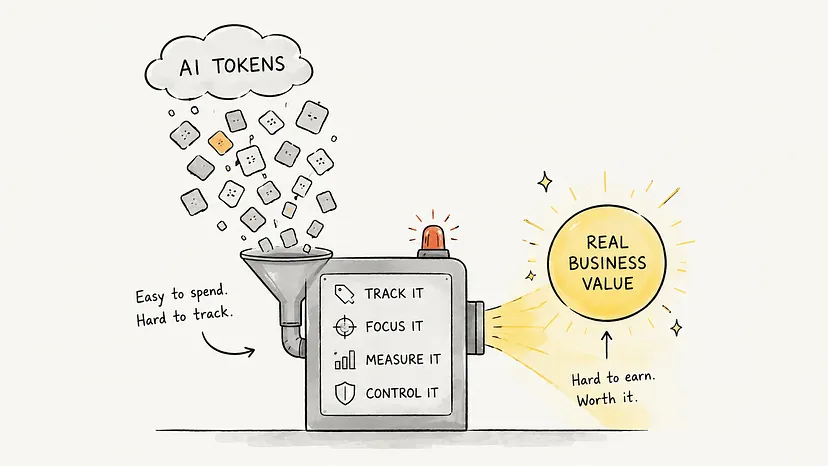
- Stop using powerful models like GPT-4 for every single task, route simple jobs to smaller, cheaper models.
- Trim your prompts; you’re probably paying for a lot of words the model doesn’t actually need.
- Fix your RAG pipeline: retrieve less, rerank better, and only send what’s truly relevant to the model.
- Keep outputs tight, set token limits, use structured JSON responses, and cut generation early when you have what you need.
- At scale, self-hosting open-source models like Llama can be way cheaper than paying per token.
- Do a token audit first, find where you’re bleeding money before you start optimizing.
Looking to build a high-performing remote tech team?
Check out MyNextDeveloper, a platform where you can find the top 3% of software engineers who are deeply passionate about innovation. Our on-demand, dedicated, and thorough software talent solutions provide a comprehensive solution for all your software requirements.
Visit our website to explore how we can assist you in assembling your perfect team.