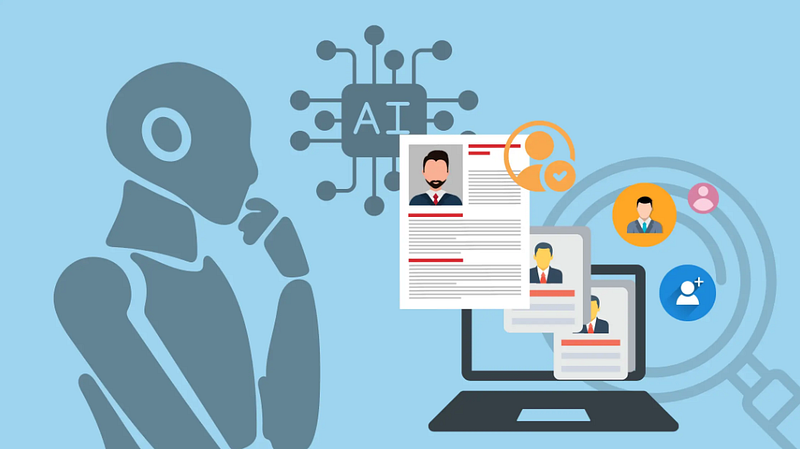
Identification of the proper talent is usually a chess game, move by move, and one wrong move will leave you behind by months of success. In today’s market, founders face a tricky question: Should I trust my gut or the algorithm?
From tech startups to healthcare giants, the tension between human instinct and AI-driven data in hiring is becoming the silent battle that defines a company’s future.
1. Why This Dilemma Exists in the First Place
Entrepreneurs have the natural capacity for fast, instinctual decisions—especially when the going gets tough. But new recruitment technologies offer advanced analytics, psychometrics, and prediction modelling, and those tools seem hard to resist.
The conflict occurs when:
- Your gut tells you the candidate “feels right”.
- The AI report concludes they are a “low fit” for the position.
- Sector-specific demands make the risk even higher (e.g., sense of beauty in fashion vs. mathematical precision in accounting).
How you can use it: When you start the hiring process, be clear which roles require more human judgment and which roles can be highly data-driven. This way, you have clarity before bias happens.
2. Human Instinct Power in the Recruitment Process
There’s a reason gut feel has withstood the test of centuries in business—it retains context that machines lack.
Where intuition excels:
- Seeing eagerness or flexibility, which no resume can possess.
- Reading body language in interviewing
- Comprehension of cultural fit in a niche company.
Example: With repeated handling under the duress of the locker rooms, a candidate may not appear on one of the AI leaderboards—but a repeat founder will instinctively sense it.
How you can use this: Pair gut instinct with structured interviews — so your intuition is guided by consistent, measurable criteria, rather than random hunches.
3. The Power of AI Data in Hiring Decisions
They are designed to scale and recognize patterns — they never get fatigued, aren’t influenced by a bad day, and can’t be swayed by charisma.
Where AI shines:
- Screening hundreds of profiles in minutes.
- Predicting success in jobs from measures of successive performance.
- Comprehending latent skill matches across industries.
Example: When hiring healthcare personnel, AI can pair nurses with shifts and specialities with minimal scheduling conflicts—a task that would tire a human recruiter.
What you can do with it: Get the front-end screening done by the machine so you can leverage the more subtle human judgment later in the funnel.
4. Over-Dependence on Both Sides: The Hidden Threats
Moving “on instinct” may be subjective and lose opportunities. Moving “all AI” may lose the subtlety by which some new hires become game-changers.
Red flags to look for:
- Instinct-only bias: Overestimating charisma, similarity to the existing team, or personal rapport.
- AI-only blind spots: Missing non-traditional professions or soft skills of the profession culture.
How you can use this: Double-check - any final hiring decision must pass both the “gut” test and the “data” test.
5. Industry-Specific Balance
Staffing balances vary by different industries.
Examples:
- Creative sectors (fashion, design, media): 70% instinct, 30% AI.
- Highly regulated industries (healthcare, aviation, banking): 30% instinct, 70%.
- 50% gut feel and 50% AI—speed and agility are both essential.
How you can use this: Before you hire, determine the risk tolerance and talent shortfall of your profession — this will guide where intuition and AI must drive.
6. Building a Hybrid Recruitment Process That Works
Successful entrepreneurs do not select only one; they combine numerous.
A 4-step simple hybrid method:
- AI Pre-Screen: Pre-screen applicants based on factual information.
- Human Screening: Shortlisted candidates receive instinct-based screening.
- Industry Fit Analysis: Measure particular skills, laws, or cultural characteristics.
- Decision Cross-Check: Use only if data and intuition agree—or at least have a justification for overruling one.
How you can use this: Begin tracking whenever your gut overrides AI and the response. Later on, you’ll know what your strengths and weaknesses are.
Conclusion: The Authentic Founder’s Advantage
The “AI Data vs Human Instinct” debate is not about agreement and disagreement but about where to shift gears.
They hone the skill of constructing not just productive but extremely effective teams with the company DNA.
The future is neither machine nor human alone. It’s machine and mankind — and businesspeople who recognize this will always hire smarter.
Looking to build a high-performing remote tech team?
Check out MyNextDeveloper, a platform where you can find the top 3% of AI engineers who are deeply passionate about innovation. Our on-demand, dedicated, and thorough software talent solutions provide a comprehensive solution for all your software requirements.
Visit our website to explore how we can assist you in assembling your perfect team.