
How AI Could Be Hiding Inside Your Favourite Apps And You Never Realised
The shift feels quiet. That’s probably why folks don’t notice it at first. You imagine artificial intelligence as machines, big server rooms, programs buzzing in research centers — maybe flashy monitors lighting up dark spaces. But the truth is, what matters lives right inside your phone. Things don’t make noise when they arrive. No sticker or pop-ups. No flash on screen. Instead, there’s just this quiet hunch — like everything runs smoother now.
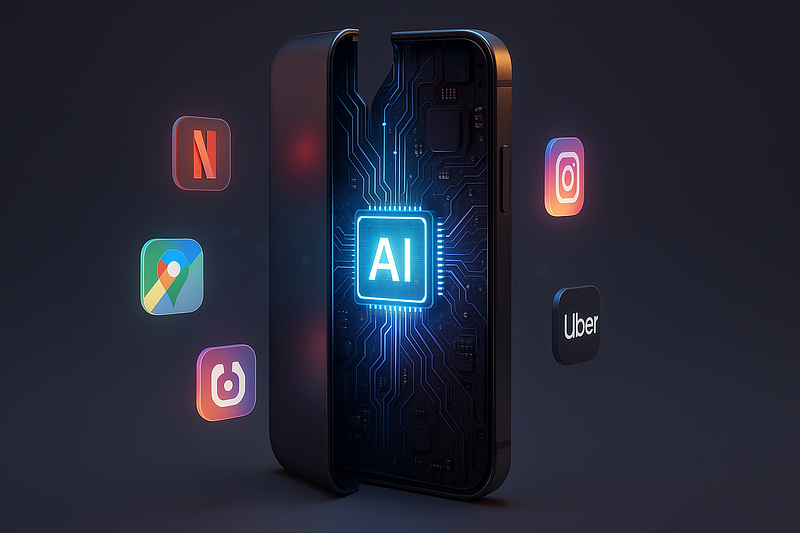
AI became the quiet force behind everyday apps. Yet hardly anyone noticed. This shift stands as one of the major turns in how apps work — likely ’cause AI stopped being a bonus tool and started running under the surface, guiding each touch. Each scroll. It didn’t wait for approval. Just showed up.
The story stretches back a decade. Yet everything moved faster once 2021 hit. Firms figured out they didn’t require fresh AI tools — instead, they could overhaul existing ones that already had massive user bases.
How AI Entered Your Favourite Apps Without Saying a Word
Start your day like most folks. Then Instagram shows up. After that, maybe Netflix pops on. Next thing you know, Uber’s running in the background. Meanwhile, Gmail pings every few minutes. Oh, and Maps? Always open. None of these call themselves AI tools. Most users believe it’s just a better design or regular programming tricks. Truth is, AI is buried way down inside. Each fact here came straight from the builders who made it happen.
- Instagram and TikTok feeds- They rank stuff by checking how you tap, stop, scroll, follow things, or leave hints without knowing it. In their feed report, TikTok broke down exactly how that works.
- Google Maps predictions- Traffic predictions use machine learning trained on past trends and real-time GPS signals.
- Netflix personalisation- Hundreds of models pick what shows up on your homepage — each one nudging the results a little differently.
- Uber’s price spikes when demand jumps, which also affects trip directions- ML checks the supply, while guessing what drivers do, then picks paths along with fares.
- Gmail spam filters- Google’s data shows the filters stop nearly all spam — about 99.9%. Still, some messages slip through now and then.
You never hit “Enable AI.” It had started on its own. Here’s the crazy bit — folks didn’t start using AI; it slipped right into their lives.
The Evolution. From Command-Based Apps To Predictive Apps
Old apps just sat there till you did something. But now they jump in before you even ask. Experts label this as ambient intelligence. Tech that picks up habits, guesses what’s next, then tweaks itself every day. A 2024 McKinsey study found that 88% of firms already use AI somewhere. Lots are now adding prediction or generation features to regular apps people use every day.
The insight feels blunt. AI stopped being a bonus feature. It turned into plumbing.
The startup showing AI doesn’t always need spotlight — Lightricks
Lightricks, known for Facetune and Videoleap, proved AI can work without hype. Tap “Remove Object” — and just like that, the object’s gone. No need to understand segmentation or style tricks. Instead of staying locked in research spaces, their first tools brought powerful edits straight into everyday apps.
Their effort showed one thing. When AI doesn’t shout to grab attention but quietly solves an issue, that’s when it works best.
The Under-the-Hood AI Running Inside Today’s Apps
These layers keep showing up. Not just once — over time, they repeat. Engineering write-ups, research papers, or internal reports? They all hint at four key pieces. One leads to another, yet each stands apart.
- Recommendation Systems — Picked by Instagram, Netflix, YouTube, Spotify, and Amazon. These models process loads of data points every second. As per analysts, these systems react quicker than people expect.
- NLP Models — Gmail suggests quick answers. Meanwhile, WhatsApp spots junk messages. Slack searches. Instead of just guessing, NLP gets what users mean — then drafts brief responses.
- Computer Vision — Snapchat filters spot your face. Meanwhile, Google Photos sorts pics by what’s inside. Then there’s Pinterest — they let you search using images instead of words. These apps understand people, items, outfits, and even backdrops.
- Forecasting How People Act — Uber ETAs. Swiggy delivery times. Health pattern predictions. Models learn from old behaviour and update themselves.
The Story of the Quiet Revolution
People thought AI would crash loudly. Instead, it crept in quietly — like power behind walls. At first, you couldn’t see it. Soon, it was in everything. Nobody installed special AI tools. One day, regular apps just started thinking. This smooth blend is what made everyone start using it fast.
GenAI got 100 million folks online in just 2 months. Hidden AI spread wide — no headlines, but everywhere. Not a crash or shock — it didn’t break apps. Slipped right into them instead.
How This Changes App Development
Startups feel the shift. Marketers notice it too — things just lean now.
- Folks want smart tech — One report from Accenture in 2024 found that 91% of users assume apps understand them with little extra input.
- Top apps use AI without making a big deal out of it — Not using large shiny controls. Instead, processes drive actual change.
- Each group is reorganized — Shopping, wellness, finance, and learning. People won’t demand AI. They’ll just prefer the apps that feel smoother.
How To Spot Hidden AI
If an app feels like it knows what you’ll do next, there’s tech working behind the scenes. When suggestions get better over time, photos group themselves, apps respond or guess actions without being told how, that’s AI. As tasks need fewer taps or clicks, automation is taking over. It’s all part of machine learning kicking in.
Closing idea. AI isn’t waiting ahead. It’s already here, humming under the surface
Your apps aren’t just tools anymore. Yet they turned into smart assistants that change with you. Most folks are still expecting a huge AI breakthrough, although the actual change slipped through quietly. Without noise. Without fanfare. Those apps you love didn’t freeze in place — instead, they picked up smart intelligence behind familiar buttons you press daily.
The next major step likely isn’t some flashy new app. It’ll be the hidden mind growing inside the one you already opened this morning.
Looking to build a high-performing remote tech team?
Check out MyNextDeveloper, a platform where you can find the top 3% of software engineers who are deeply passionate about innovation. Our on-demand, dedicated, and thorough software talent solutions provide a comprehensive solution for all your software requirements.
Visit our website to explore how we can assist you in assembling your perfect team.