
Why This Underdog Startup Could Be the Next Big Thing
How this Amsterdam-based startup is rewriting biotech with AI-designed proteins — and what we can steal from their playbook
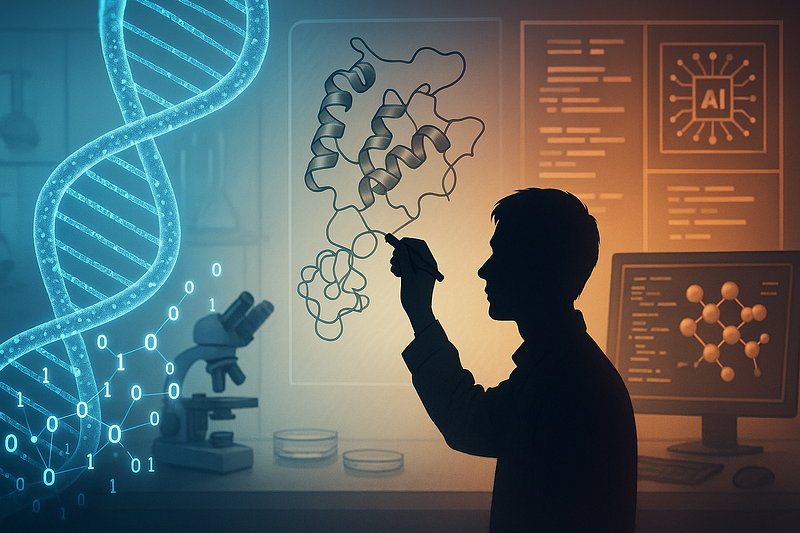
Meet Cradle — Protein Design Meets Artificial Intelligence
Cradle started in 2021, built by experts from the biotech and artificial intelligence fields — it’s a Dutch-Swiss venture chasing an unusual goal: treating proteins like code you can write.
The idea? Ditch slow, old-school methods for finding drugs or tweaking proteins; instead, run AI systems that work kind of like chatbots but craft chains of amino acids on demand — ones that hold their shape, do specific jobs, latch onto targets. Once these virtual designs pop out, real-world lab tests check if they actually perform. This whole push tries something daring — mixing smart algorithms with the raw mechanics behind living things
By late 2024, Cradle had raised $73 million in its Series B, following an earlier €5.5 million seed round and a $24 million first major round. Their target? Boosting lab capacity while growing the software part of their system. This speed, along with solid tech direction, suggests they could become a bigger player down the line.
What makes Cradle different
- Generative AI meets biology
Their setup acts like autocomplete, only swapping out letters for amino acids. Pick a feature you want — better sticking power or longer shelf life — and the tool churns out protein versions that might fit. Stuff that dragged on for ages now gets cycled through way faster. - Code meets science — all in a single space
Cradle blends lab work with coding. While biotech firms focus on test tubes, and tech startups live in software, this one does both at once. Predictions from algorithms get checked fast using their own wet-lab results, so designs improve through real-world checks. Instead of trusting only digital guesses, they tie every result back to physical proof — cutting empty assumptions. By linking silicon models to living cells, they stay grounded where others drift. - Aiming high
Protein engineering powers medical advances — also drives progress in farming tools, green products, or factory catalysts. Cradle zeroes in on these major fields, so they skip niche markets. Instead, they tackle challenges with worldwide impact.
Why Being the Underdog Helps
Being based in Amsterdam or Zurich instead of packed American tech centers lets them move freely. With quieter surroundings, focus comes easier.
They’re catching two trends at once — artificial smarts and life science — and the overlap is still early. Big names still struggle to make machine-powered protein building work reliably. That gap gives Cradle a chance to move ahead.
Yet their financing proves backers are confident. $73 million? Far from small change. With that cash, they can grow steadily — no need to crash through speed.
Lessons for startups and content builders
- Tell a tech tale using everyday words.
Cradle skips the hype. “We program biology like software” — straightforward. Simple talk grabs focus better. - Work out timing plus expenses.
Through speeding up how proteins are made, Cradle alters research expenses. Each startup leader must wonder — does my offering reshape speed, price, or maybe even both? - Think ecosystem early.
With Cradle, getting labs to use their tools is what matters. Things never work all by themselves. People need to rely on them, plus they’ve got to fit right in. - Keep ecosystem and tooling in mind.
They aren’t promising quick fixes. Instead, they focus on speed. This approach — sure but calm — earns trust quicker than loud claims ever do.
The Hard Truth
Biotech doesn’t cut corners. Rules pile up, making production messy; that piles on delays. Testing takes forever — slows everything down.
Proteins made by artificial intelligence show potential — though still new. Drug companies adopting them? That’ll take time.
Yet rivals are closing in. To stay on top, you’ve got to move quicker — safeguard your ideas while showing real market success.
Closing thought
Every few years, a company comes along that changes the rules of its field.
If Cradle succeeds, drug discovery, enzyme design, and maybe even materials engineering could work like software development — fast iterations, automated learning, and global collaboration. They’re quiet. They’re deliberate. And that’s often how real revolutions start.
Looking to build a high-performing remote tech team?
Check out MyNextDeveloper, a platform where you can find the top 3% of software engineers who are deeply passionate about innovation. Our on-demand, dedicated, and thorough software talent solutions provide a comprehensive solution for all your software requirements.
Visit our website to explore how we can assist you in assembling your perfect team.