Speed. That’s what nearly every new software tool talks about these days. Be it systems built for coding with less effort or AI-powered tools that work alongside programmers — they all say the same thing. Work that took weeks now takes days. In some cases, it takes just a few hours to complete.
Most of these promises feel vague. Built on demos too clean to trust. Or examples that ignore real messiness. So we checked performance differently. With an actual client. An honest product concept. And zero setup time allowed.
This blog clearly outlines events, verifies facts against reliable sources, and then aligns them with standard performance markers commonly observed across the sector.
What stands out comes through quiet comparison rather than bold claims.
The context: A real product request, late at night
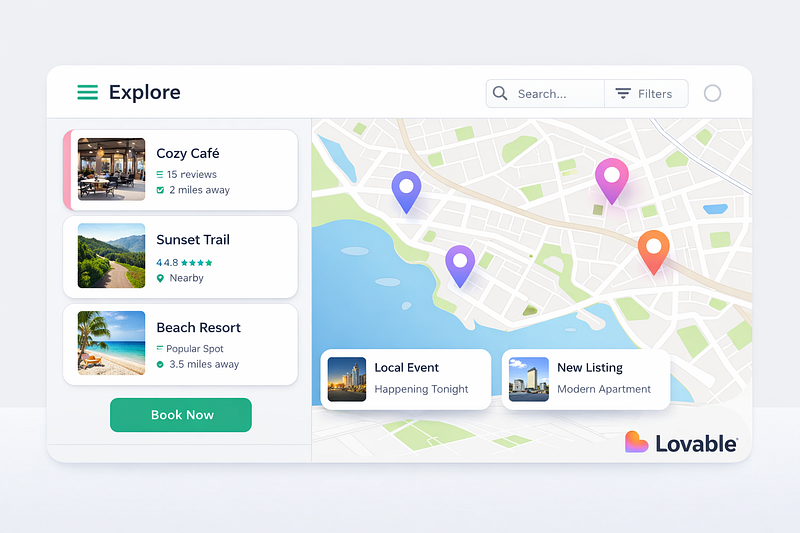
Around 10 pm, a client explained what she imagined for her project. It included multiple user flows and a discovery experience that relied on location-based data.
Teams might just stop here. What usually happens next feels routine. Go over the project details first. Then draft up a proposal. Lay out the timelines. After that, schedule follow-ups.
But we continued- this time, we aimed to check if Lovable handled compression during early product creation — when things move slowly. That stretch from a thought to something real began shaping up differently.
No contracts. This uncertainty matters — speed promises often fail right here.
What Lovable is designed to do
Lovable is an AI-assisted platform that generates full-stack web applications using natural language prompts. Public documentation and third-party reviews show it crafts both front and back-end components, which you can modify later. Most outputs rely on current tools like React alongside standard backend services. The system handles the full project structure without needing manual setup from users.
What stands out? Independent reviewers often see Lovable best suited for quick prototypes, early-stage products, or behind-the-scenes utilities. Not meant to swap out conventional development when dealing with intricate or highly regulated environments. Speed takes center stage here because of that difference.
First output: Less than three hours
Around three hours after beginning, this much had already been done
- A working outline of the main ways people interact with the product.
- Touch-sensitive displays responded more like programs than lifeless prototypes.
- Navigation logic that allowed realistic exploration of the product.
This holds a lot of value in comparison to traditional workflows. The Nielsen Norman Group’s investigation reveals that creating interactive prototypes, if done manually, usually needs several days to be completed, even before the engineering work starts.
Lovable’s innovation played a major role in shortening that period as it produced the structure and flow straight from product intent, thus minimizing the necessity of separate design and development handoffs.
Morning iteration. Not polish, but expansion
By the next morning:
- The Explore page was live with Google Maps integration, which lets users move through locations without switching apps.
- Second iteration of the preview sat waiting, ready to ship.
- A demo link was ready to be shared.
Since setting map functions requires APIs, UI rules, plus managing data, most teams put this step past the first green light.
Lovable handled this through pre-structured components plus automated setup. That fits right into today’s trend, where simpler coding tools help skip tedious setups instead of building each part manually.
What this looks like next to typical schedules
Most digital product teams work in similar ways when getting things done:
- Interactive prototype creation. 3 to 5 working days.
- Core navigation and flows. 1 to 2 weeks.
- Location-based features. An additional 3 to 5 days.
Most teams, even seasoned ones, usually take two or three weeks for similar results. This time, close to 80 percent of what we planned was worked on by the next morning after one night’s effort.
Just because Lovable existed didn’t make building things easy. What changed was how fast the first steps happened — steps that normally eat up months.
What research says about AI-assisted speed
Even though nobody has studied Lovable directly in published papers, wider findings line up with what we see.
Tasks finish quicker when coders use AI, GitHub found. One look at the numbers showed some work got done 55 percent faster. Early stages of building feel lighter on the mind when routine setup gets managed by artificial intelligence, studies from Stanford and other academic research suggest. That happens because the cognitive load drops when machines write the basic structure.
Forrester’s assessment of low-code platforms suggests a 50–70% reduction in time to market for MVP development. Lovable is among those, but with a more pronounced focus on the product structure derived from natural language.
What we saw lines up just like those earlier outcomes.
What makes things move fast
Lovable’s speed does not come from writing perfect code. It comes from eliminating delays.
- No separate design to development translation.
- No manual setup of basic architecture.
- No waiting between idea and interaction.
The product shows up — ready for testing — so discussions shift from plans to real feedback. It’s those first steps that make moving quicker down the road possible.
Limitations worth stating clearly
Some situations just do not fit well with Lovable. It works fine in certain spots yet falls short elsewhere. Not every task matches its design. Different tools handle different jobs better sometimes.
According to independent assessments and documentation from the platforms, limitations are evident in the handling of highly personalized systems, strict compliance conditions, or intricate legacy integrations. It is still necessary to have human intervention to confirm the correctness of logic, security, and scalability.
What mattered here was testing an idea at the start, not polishing it for release. Given that aim, the system worked just fine.
What this test actually proves
Proof isn’t here yet that Lovable swaps out engineers. What we see is a sharp decline in the sluggish, guess-heavy stretch of building products.
Once feedback starts coming in, work already exists to respond to. This moves things away from guessing toward improving what’s there.
Conclusion
So is Lovable fast? Yes, the evidence points that way. Tests show it works quickly, backed by studies into AI help for building software.
What stands out most? The pace stays steady, clear. Setup gets shorter, transitions vanish, and testing begins sooner. Teams crafting early versions, checking hunches, showing prototypes — tighter timelines shift results in real ways.
This is not about believing claims. It is about observing results and understanding where they come from.
Looking to build a high-performing remote tech team?
Check out MyNextDeveloper, a platform where you can find the top 3% of software engineers who are deeply passionate about innovation. Our on-demand, dedicated, and thorough software talent solutions provide a comprehensive solution for all your software requirements.
Visit our website to explore how we can assist you in assembling your perfect team.